Service bay
How to read a tire size
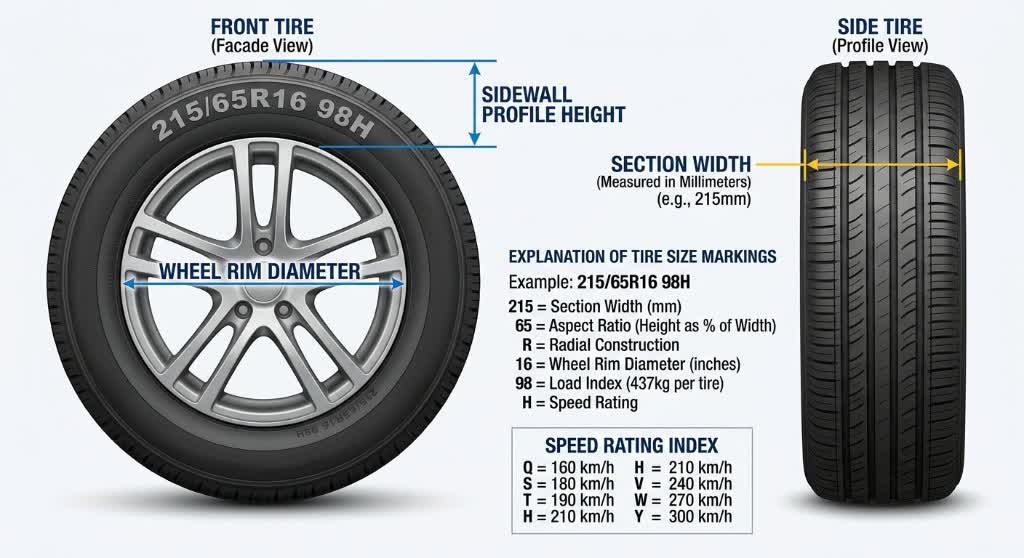
A size such as P265/70R17 is a compact description of width, sidewall height, construction, and the wheel it belongs on. The rest of the sidewall tells you how much weight and speed that tire is rated to carry.
The three numbers that set the shape
Take P265/70R17, a size you will see often on half-ton trucks and midsize SUVs around Phoenix. The 265 is the section width in millimeters, measured across the outer sidewalls at the tire's widest point when it is mounted on the measuring rim the manufacturer used. It is not the tread width you see when you look down at the contact patch. A wider section can look more planted, but it also adds weight and can change how the tire sits inside the fender.
The 70 is the aspect ratio. Sidewall height is 70 percent of the section width, so 265 × 0.70 = 185.5 mm of sidewall. A lower aspect, such as 55 or 45, shortens that sidewall. The tire responds faster on a freeway transition and leaves less rubber to absorb a sharp expansion joint. A higher aspect, such as 75, adds cushion and more overall diameter if the width and wheel stay the same.
The R means radial construction: the body plies run from bead to bead, and belts under the tread stabilize the crown. It is the construction used on virtually every passenger and light-truck tire sold for street use. The 17 is the wheel diameter in inches, measured at the bead seat, not the outside of a decorative lip. A 17-inch tire does not mount on an 18-inch wheel. That last number has to match the wheel exactly.
Letters in front of the width
A leading P marks a P-metric passenger tire, sized under a standard that assumes a typical passenger-car load. Many crossovers and some lighter SUVs use P-metric tires even when the vehicle looks truck-like. An LT prefix marks a light-truck tire, built with heavier construction and a higher load range, often expressed as C, D, or E. LT tires usually call for higher inflation pressures than a P-metric tire of a similar size. Mixing those assumptions is a common source of harsh ride or an overloaded tire.
European metric sizes often have no prefix at all, just 265/70R17. Flotation sizes, written like 33x12.50R17, are a different language: overall diameter in inches, section width in inches, then wheel diameter. They are common on off-pavement packages. You cannot compare a flotation size to a metric size by staring at them. Convert both to overall diameter, which is what the upsize calculator does for metric sizes, and what the plus-sizing guide explains in words.
Load index and speed rating
After the size you will usually see a service description such as 115T or 121/118S. The load index is a code, not the kilogram rating printed in full. A higher index means a higher maximum load at the pressure the tire standard specifies. The letter is the speed rating. T is 118 mph, H is 130 mph, and so on. Valley freeways are fast, but the practical point is not chasing a letter. The replacement tire should meet or exceed the load index and speed rating the vehicle was designed around, especially if you tow a boat to the lakes or carry a work bed full of tools.
Load range on an LT tire is the ply-rating equivalent: Load Range E is the stiff, high-pressure construction many three-quarter-ton trucks use. Putting a Load Range E tire on a half-ton that was engineered for a P-metric tire, then inflating it to the maximum stamped on the sidewall, often makes the truck ride like a dump truck and can wear the center of the tread. The door placard, not the maximum on the sidewall, is the starting pressure. That distinction is covered again in the pressure guide.
Overall diameter is the number that matters on the road
Width, aspect, and wheel diameter combine into one height. In millimeters, overall diameter is twice the sidewall plus the wheel diameter converted from inches (multiply inches by 25.4). For 265/70R17 that is 371 mm of sidewall pair plus 431.8 mm of wheel, or 802.8 mm. A taller tire raises the truck, lengthens the distance traveled per revolution, and makes the speedometer read slower than the truck is actually moving. A shorter tire does the opposite and can reduce ground clearance under the differential.
Phoenix drivers often change size when they replace factory wheels or want a slightly wider footprint for gravel. Keep the new overall diameter close to the original unless you have measured fender clearance, confirmed the speedometer error is acceptable, and checked that the load index still covers the truck. A difference beyond about 3 percent is the point where those effects stop being trivial. The calculator flags that threshold.
- Read width, aspect, and wheel diameter before you compare prices.
- Match the wheel diameter exactly. The aspect ratio is not a substitute.
- Check the prefix: P-metric, LT, or a flotation size are not interchangeable by appearance.
- Keep load index and speed rating at or above the originals when you tow or carry weight.
- Compare overall diameter, not just the first number, using the plus-sizing notes and the calculator.
Questions
Is a wider tire always a larger tire?
No. Width is only the section. A 285/65R18 can be close in overall diameter to a narrower tire on a smaller wheel, or it can be much taller. Always compute diameter from width, aspect, and rim together.
Can I ignore the load index if the size matches?
No. Two tires branded with the same 265/70R17 can have different load indexes. The vehicle still needs the capacity it was certified with, particularly when the bed or the cabin is full in summer, when hot inflation pressure is already on the high side.
Why do some Phoenix trucks show a size the door sticker does not list?
A previous owner may have plus-sized the wheels or moved to a flotation size for dirt roads. Treat the door placard as the original specification and the mounted tire as a modification you still have to understand. Wheel fitment is the next check if the wheels are not factory.